

Copyright © 2026 HLK Industries All rights reserved.
Genuine vs. Faux Leather: How Can Brands Choose the Right Material?
By : Admin
Oct 12,2026
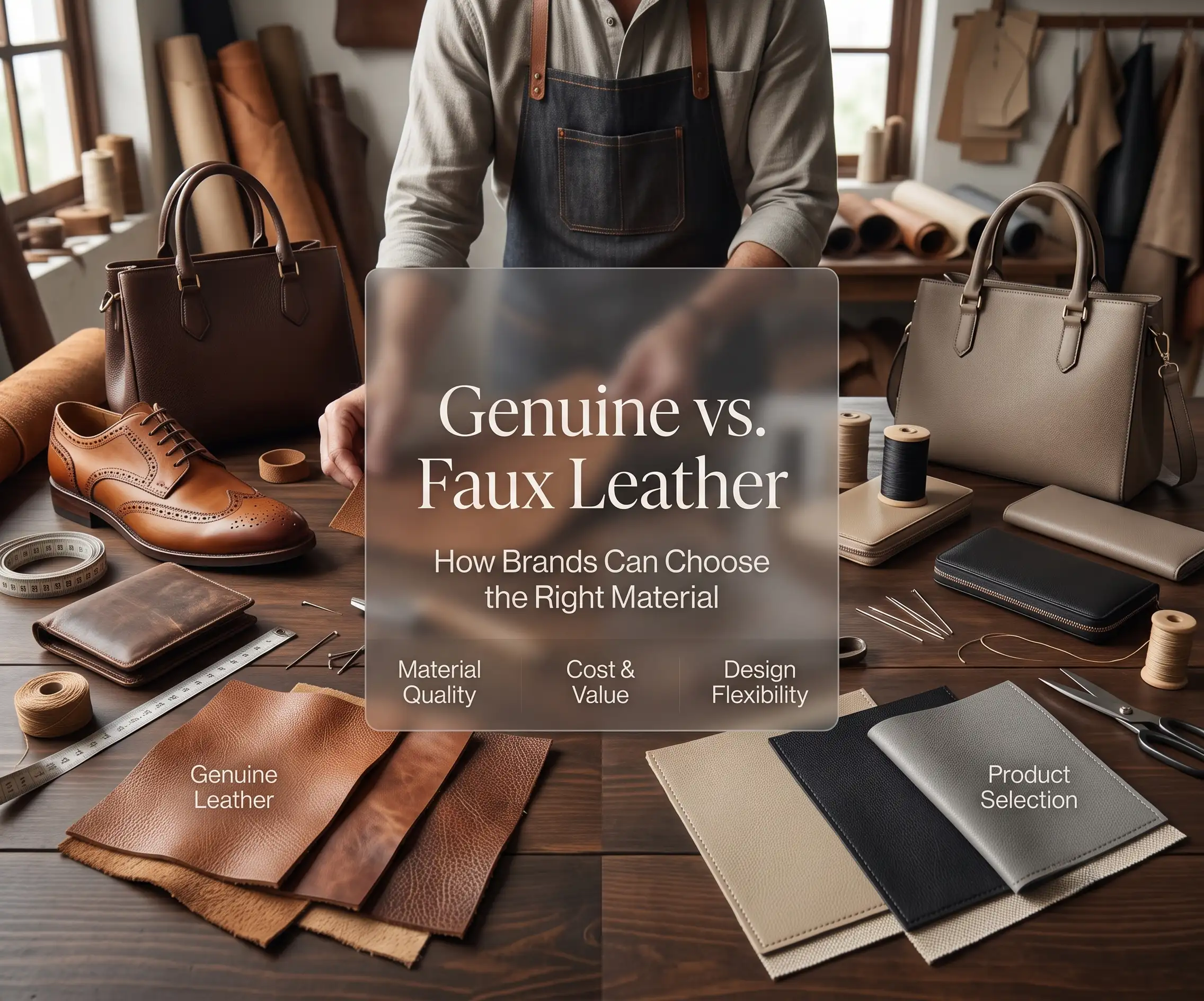
Choosing a suitable leather type is significant in safeguarding quality and costs as well as increasing the profit margin from selling goods in both domestic and international markets. Leather quality influences a bag, purse, and accessory’s durability, looks, environmental aspect, and customer satisfaction. Cooperating and working with trustworthy leather suppliers such as HLK Industries Enables manufacturing companies to identify and select types of leather according to their goals, whose products will undoubtedly ensure quality.
Understanding Genuine Leather and Faux Leather
Genuine leather comes from animal skins that have been treated and converted to leather in a natural way through the tanning process. The quality and appearance of genuine leather can vary depending on the kind of hide, the method of manufacturing and the finishing process. Genuine leather lasts for years when taken care of properly and often outlasts most other materials and develops a beautiful patina over the years.
Faux leather is created with artificial or synthetic materials like polyurethane (PU) or polyvinyl chloride (PVC). Faux leather is available in different colors and finishes which cost less than real leather. Understanding all the distinctions will assist brands in choosing the right leather material for long-lasting and comfort.
Genuine vs Faux Leather: Key Differences
An in-depth knowledge and understanding of genuine leather and faux leather can assist companies and customers in making an appropriate decision regarding durability, appearance, maintenance and expenses. Companies that work with manufacturers like HLK Industries can use the information mentioned above to select the right material for their products
| Comparison Factor | Genuine Leather | Faux Leather |
|---|---|---|
| Material Composition | Made using hides of animals that have been processed by tanning. | Material is produced by using artificial material, generally, polyurethane (PU) or polyvinyl chlorine (PVC) with the sole purpose of pretending how leather looks. |
| Appearance and Texture | Features natural grain patterns, distinct textures, and variations. | Provides users with the uniform look of having consistent shades and texture. |
| Durability | High-quality leather will last for years with proper care. | Durability of this fabric varies depending on the quality of the material, coating, and how it has been manufactured. |
| Breathability | Generally better breathability compared to conventional synthetic leather. | Usually less breathable, although the performance score would depend on the type of material used. |
| Maintenance | Requires appropriate cleaning, conditioning, and protection against moisture. | Cleaning is very easy as well, usually just wiping it with a damp cloth with the help of a detergent. |
| Water Resistance | Naturally porous and may require protective treatment. | Often has a water-resistant surface, depending on its coating and construction. |
| Cost | Generally more expensive due to hide quality and processing requirements. | Usually more affordable, making it suitable for cost-conscious product ranges. |
| Aging and Appearance | May develop a patina and character through regular use. | Can maintain a consistent appearance but may peel or crack as coatings deteriorate. |
| Design Flexibility | Suitable for premium bags, wallets, belts and other leather goods. | Available in varied colors, finishes, and textures for fashion accessories and bags. |
| Environmental Considerations | Involves animal hides tanning processes and associated resource use. | Relies on synthetic materials; environmental impact depends on composition, production and recyclability. |
| Best Suited For | Buyers prioritizing natural texture, durability and traditional leather characteristics. | Buyers prioritizing affordability, consistent finishes and a wider range of design options. |
Exploring Different Types of Leather
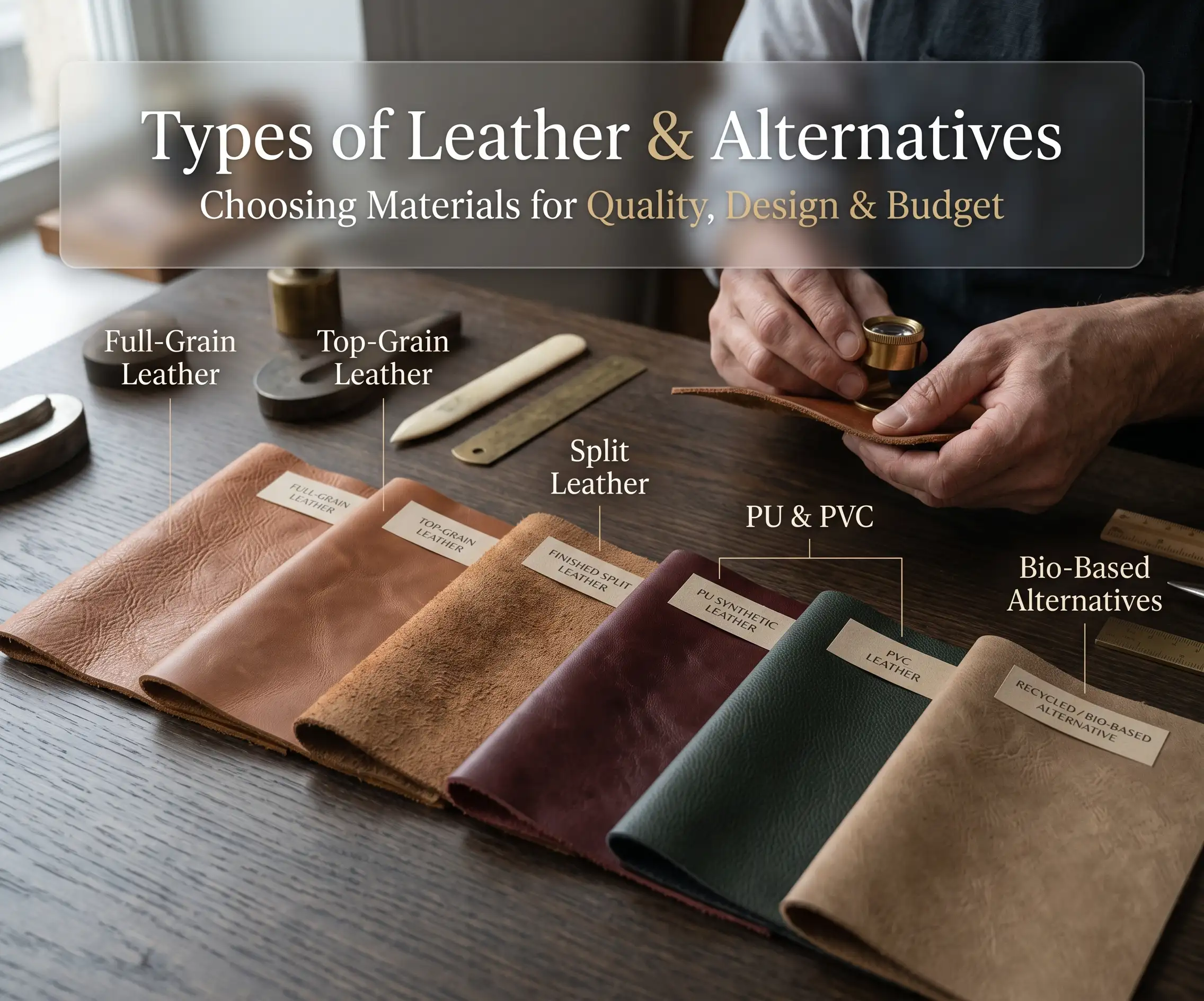
Leather comes in various types, each having its distinct attributes, appearance, cost and texture. Understanding the differences among these types helps businesses choose the best leather for the products they want to make.- Full-Grain Leather: Full-grain leather is considered the toughest and the best kind of leather. It is made with the top layer of the hide, which has not been altered in any manner and thus is of a natural surface.
- Top-Grain Leather: A kind of leather that features a beautiful surface and offers sufficient correlation between appearance, strength and flexibility.
- Split Leather: A variety obtained from the internal layers of leather applied in the production of leather with finishing.
- PU Leather: A man-made synthetic material designed with a leather-like surface for many fashion goods, available in many colors, textures and finishes but at lower prices.
- PVC Leather: A fake leather material made of polyvinyl chloride (PVC) that is widely used for various purposes but, like PU leather, it can be flexible and comfortable depending on its specifications.
- Recycled or Bio-Based Substitutes: Leather made partially of recycled or renewable materials that may or may not present substantial environmental value depending on their formulation and creation process.
The ideal variant formulation is determined by the aims of the product, its price, design, and performance requirements.
How to Choose Between Genuine Leather and Faux Leather?
Determining which of the two is better between Genuine and Faux, is dependent upon the buyer’s budget, product design, durability needed and the intended clients for the products. When buying products from a Leather Goods Manufacturer, companies must select the most appropriate material to suit the product cost and needs.
- Budget Consideration - Genuine leather is relatively expensive but faux leather can serve as an economical choice for products that are made for the cost-conscious market.
- Durability - Genuine leather can last for years when maintained well. On the other hand, faux leather may last depending on the quality of the materials used during the process.
- Product Type - Genuine leather works well for high-end products such as bags and wallets. Faux leather allows manufacturers to have more freedom with color choices and designs.
- Maintenance Requirements – The genuine leather typically requires conditioning and correct cleaning, whereas many of the artificial leathers can easily be cleaned using the aid of a wet towel.
- Customers Preference - Figure out whether your customers favor natural material, economy, consistency, or natural material.
- Environmental Friendly - Look into the environmental friendliness issues connected to the sourcing, production process, longevity and recyclability of the material instead of making assumptions about it.
- Plan for Customization - While designing Custom Leather Bags, take into consideration the flexibility of the material, stitching characteristics, thickness, color consistency, and other aspects of the material.
HLK Industries, a professional Leather Goods Manufacturer, helps you in the selection of the leather material, beginning with analysing the purpose of the product and customer's requirements.
What export buyers check before choosing a material
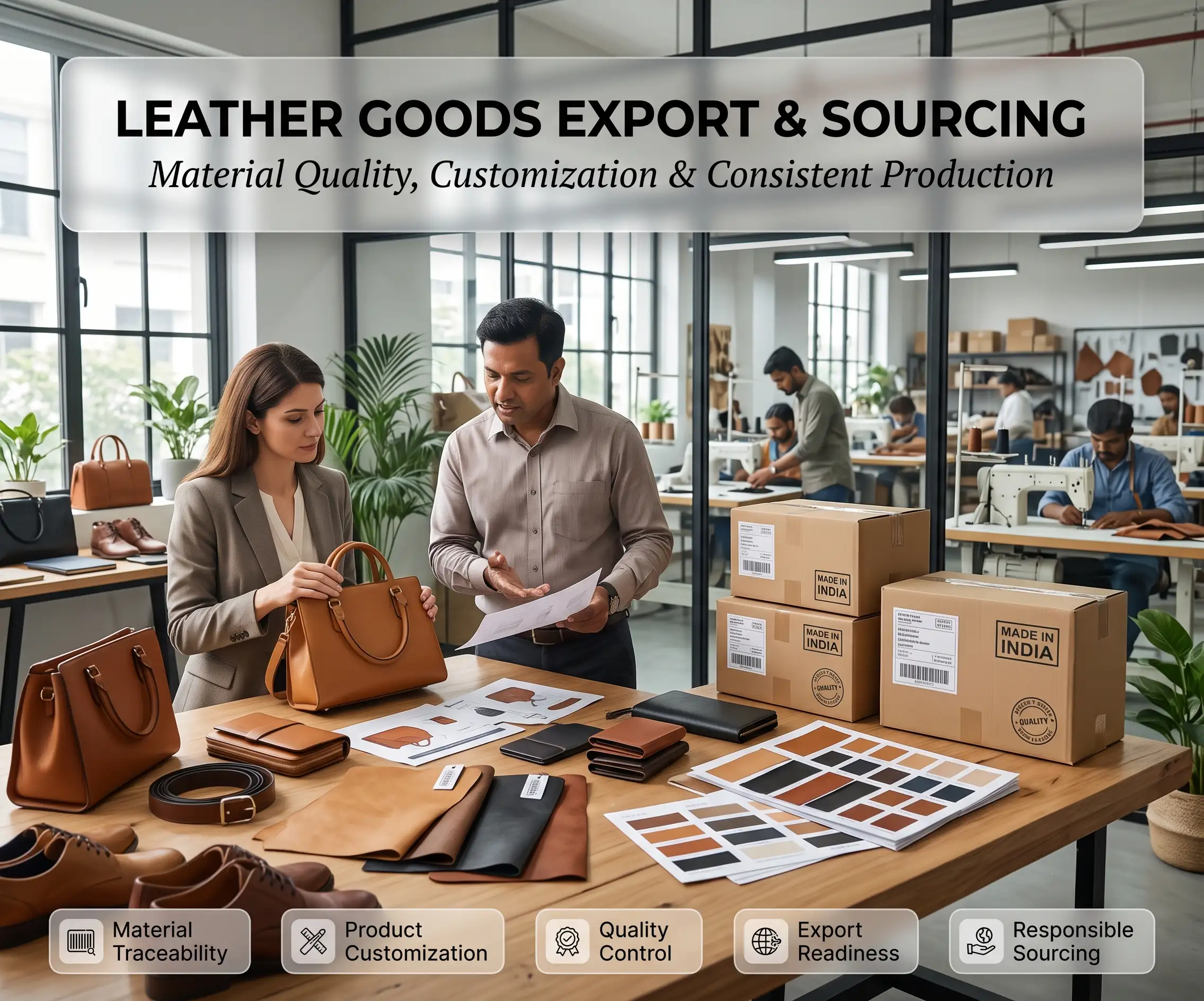
Various trends in the export of leather goods indicate how customer preferences in terms of material, quality, as well as sustainability have changed. Brands must keep these trends in mind while developing products for international markets.
- Material Selection: There are many types of leather that can be used in the production of goods, as they all achieve the balance between durability, quality, and low price.
- Customized Designs: Custom Leather Bags enable companies to provide brands with the chance to differentiate themselves from competitors.
- Quality Control: A reputable leather products manufacturer adheres to stringent quality control principles to guarantee quality and durability of products without exception.
- Smart Material Selection: The selection of leather should take into account the intended purpose of a leather product, budget and endurance.
- Sustainability: Businesses ought to make sustainability a priority by ensuring responsible sourcing of materials and high transparency of the supply chain.
HLK Industries assists in the selection of materials and product development for international markets.
Conclusion
Understanding the Leather Goods Export Trends enables manufacturers to make wise decisions regarding their materials, product designs and manufacturing partners. When deciding between genuine and fake leather, appropriate material selection is important to ensure it is right in terms of the product, cost and consumers’ expectation. Working with a competent Leather Goods Manufacturer will help you have your products made efficiently and even customize them, such as Custom Leather Bags. At HLK Industries, we understand the significance of material selection and maintaining material standards to help develop a successful leather goods business that meets the current market demands.
Questions People Frequently Ask
Genuine leather is made from animal skins, while faux leather is an artificial substance meant to emulate the look and feel of leather. Their differences include texture, durability, maintenance, cost and environmental effect.
Genuine leather is a good material for making luxury bags because of its longevity and unique texture. On the other hand, faux leather is an economical choice that gives you many color options. It all depends on your preferences and needs of the customers.
Full-grain leather, top-grain leather and split leather are the most used types of leather for manufacturing. There are also artificial leathers, such as PU and PVC leathers that are commonly used.
No, the impact of both types of materials on the environment depends on sourcing of materials, chemicals used in manufacturing process, durability of the product and ways of its disposal. Brands should analyze environmental data and choose the right material accordingly.
Brand needs to consider manufacturer's experience, quality of materials, samples of finished products, capacity and quality control processes. Also, customization features, regulations compliance, minimum order quantity, communication and delivery terms should be taken into account.